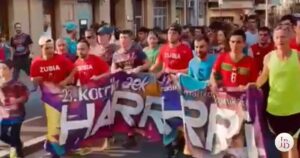
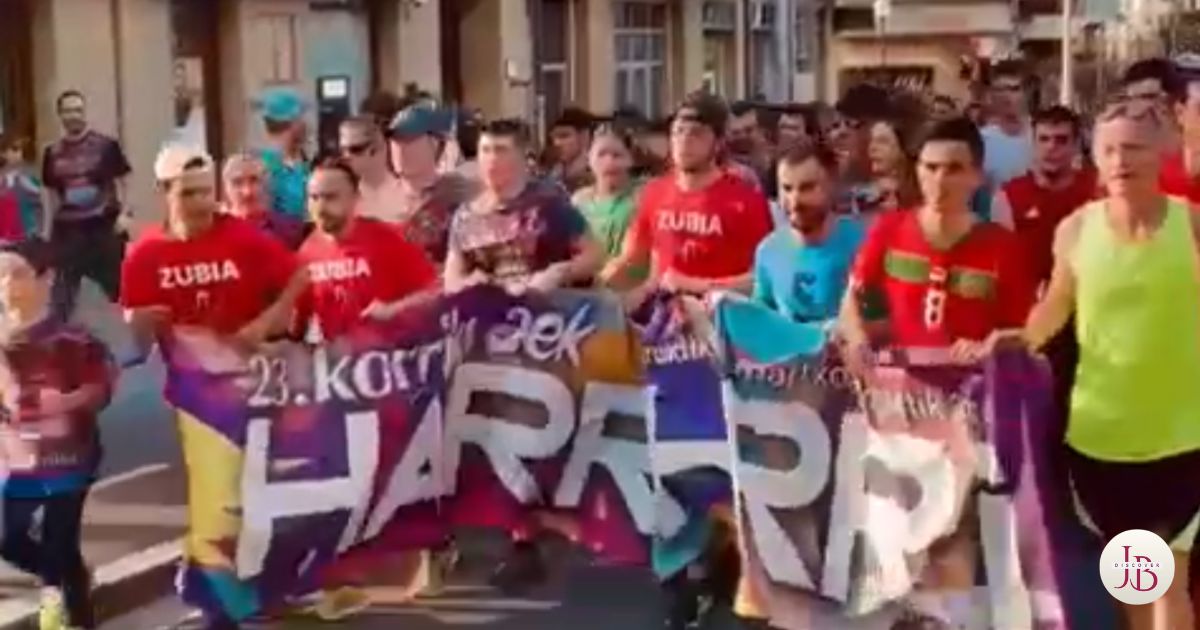
“Tipi‑tapa, tipi‑tapa, Korrika!”
Every two years, this chant echoes across the Basque Country as thousands of runners take part in Korrika, a nonstop relay race held in support of the Basque language, Euskera. For eleven days and nights, the race crosses towns, mountains, and borders, carrying with it a wooden baton — and a message of cultural resilience.
I’ve lived in the Basque Country for more than a decade, and each edition of Korrika reminds me that this is far more than a sporting event. It is a collective declaration of identity, pride, and linguistic survival.
What Exactly Is Korrika?
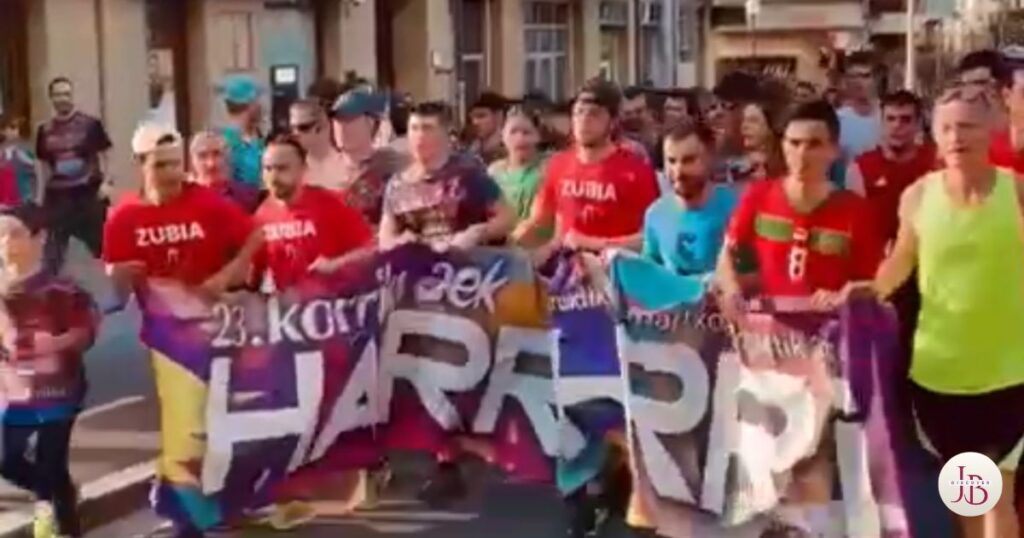
Korrika is one of the largest cultural events in the Basque Country. Created in 1980 to raise funds for AEK, the organisation dedicated to teaching Euskera to adults, the race has grown into a symbolic movement that unites Basques from both sides of the French–Spanish border.
The format is simple but extraordinary:
- The relay covers more than 2,000 kilometres.
- It runs day and night without stopping.
- A wooden baton, the lekukoa, is passed from runner to runner.
- Inside the baton is a secret message, revealed only at the finish line.
Each edition begins and ends in different towns. In 2026, the race set off from Atharratze in the French Basque Country and concluded in Bilbao, drawing crowds that lined the streets at every hour of the day.
Why Basques Run: A Language That Refused to Disappear
The heart of Korrika is Euskera — one of Europe’s oldest languages and one that has survived centuries of political pressure. During the Franco dictatorship, speaking Euskera in public was prohibited. Many families kept the language alive only in whispers at home.
Although Euskera enjoys stronger protection today, it remains a minority language, often overshadowed by Spanish and French. Korrika is therefore not just a celebration; it is an act of cultural resistance.
This year’s slogan, “Euskara gara” (We are Basque), captured that sentiment. It reminded participants that a language is more than vocabulary — it is a shared identity and a way of belonging.
How to Experience Korrika
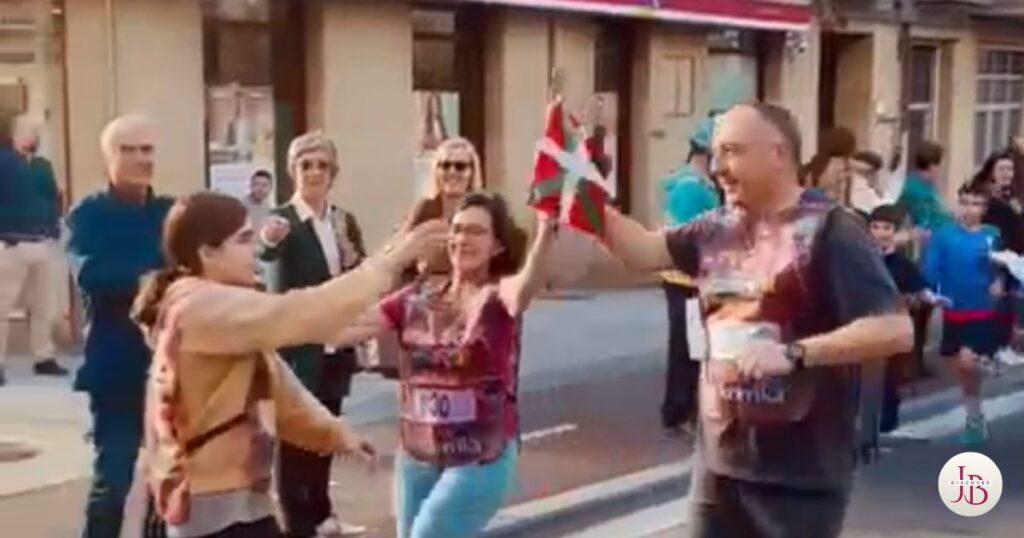
There are many ways to enjoy Korrika:
- Original soundtrack
- Buying a kilometre
- Vibrant atmosphere
A soundtrack for the movement
Each edition features an original song created by Basque musicians. In 2026, the anthem was “Xiberutikan Mendebaldera” by ZETAK, featuring Maixux Zugarramurdi and Erramun Martikorena — a track that quickly became a regional hit.
Buying a kilometre
Schools, companies, associations, and community groups can “buy” a kilometre to support AEK. Many people travel across the region to run their chosen stretch, turning the event into a weekend adventure.
Following the race in real time
It’s common to see people glued to the Korrika app or ETB broadcasts, tracking the runners’ progress and hoping to spot familiar faces.
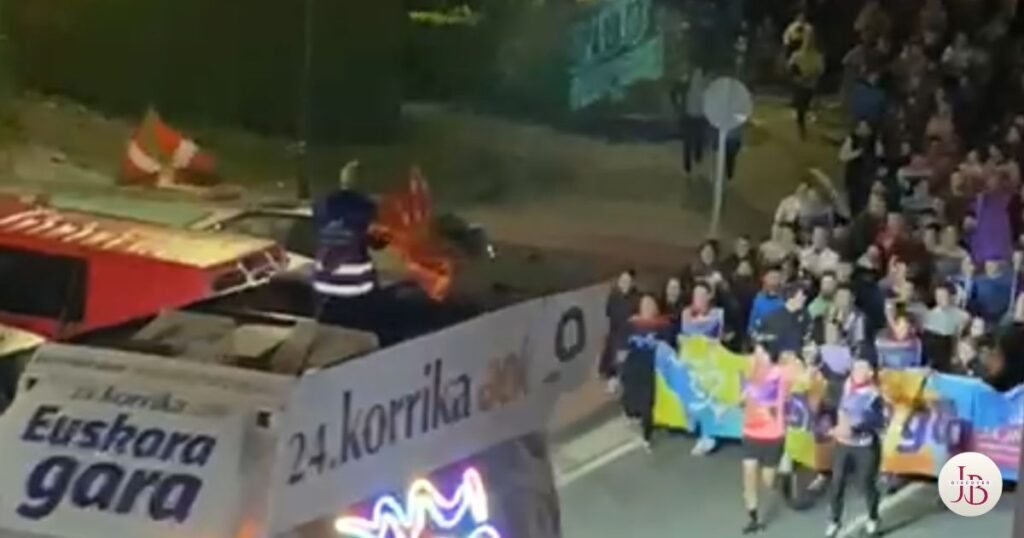
My first Korrika was unforgettable — and honestly, a little shocking. Our town’s turn came at 4:45 in the morning, and we had to sprint behind the AEK van blasting “Tipi‑tapa, tipi‑tapa, Korrika!” at full volume. I had only been in the Basque Country for five days, and the surreal mix of darkness, cold air, and loud chanting felt overwhelming.
But over the years, I’ve come to understand the emotion behind it. Now, whenever I can, I join the race — even if only for a few hundred metres.
Bilbao 2026: A Finale Filled With Emotion
On 19 March, Bilbao welcomed the final stretch of Korrika with music, food stalls, and traditional herri kirolak (Basque rural sports). When the baton finally reached the City Hall, the secret message was read aloud to thousands of people gathered in the square — a moment that always carries deep emotion.
According to AEK, the 2026 edition brought together nearly one million participants, with 3,400 relays covering 2,175 kilometres. Once again, Korrika demonstrated that Euskera and Basque culture remain inseparable — and that the community’s passion continues to run strong.